

1. Vietnam’s Seagoing Fleet Shows Limited Growth Over the Past Decade
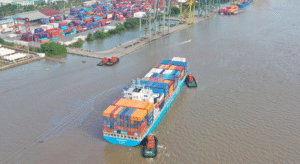
According to statistics from the Vietnam Maritime and Inland Waterways Administration, by the end of 2025, Vietnam’s seagoing fleet consisted of more than 1,400 vessels, with a total deadweight tonnage (DWT) of approximately 9.4 million tons. This places Vietnam 26th globally, accounting for about 0.8% of the world’s total fleet capacity.
The average age of Vietnamese vessels stands at 17.3 years, with more than 50% of the fleet older than 15 years.
Compared with 2016, when Vietnam had 1,267 vessels with a total capacity of 7.6 million DWT, the overall scale of the fleet has changed only marginally over nearly a decade. In fact, the number of vessels has declined by around 300 units, equivalent to an average decrease of 2.1% per year, while total DWT has increased only slightly, at an average rate of 0.91% per year.
2. Improved Fleet Structure, but Large-Capacity Vessels Remain Scarce
A positive development is the significant increase in average vessel size. Average tonnage per vessel rose from approximately 6,000 DWT to nearly 8,900 DWT, corresponding to an annual growth rate of about 4.8%.
The fleet structure has also become more balanced, with a growing number of specialized vessels, particularly container ships (increasing from 36 to 45 vessels) and liquefied gas carriers (from 12 to 21 vessels).
However, compared with global trends, Vietnam’s fleet still lags far behind. Between 2016 and 2024, the global seagoing fleet grew at an average rate of 3.15% per year. Container vessels recorded even stronger growth, at 5.4% per year, and since 2023, container ship capacity has expanded by more than 7% annually, with vessel sizes reaching over 24,000 TEU.
By contrast, the largest container vessel operated by Vietnamese shipping companies has a capacity of only around 2,000 TEU.
3. Declining International Market Share and Heavy Reliance on Foreign Carriers
Despite Vietnam’s long coastline and strategic location near major international shipping routes, more than 90% of the country’s import–export cargo volume is currently carried by foreign shipping lines, particularly on long-haul routes to Europe and the Americas.
Over the past decade, the international market share of Vietnam’s seagoing fleet has shown a gradual decline, falling from 11% in 2015 to around 7% during the 2023–2024 period, averaging approximately 7.3%.
The primary reason is that domestic fleet capacity has failed to keep pace with the rapid growth of maritime cargo volumes. While seaborne trade volumes have been increasing by more than 10% per year, the total capacity of Vietnam’s fleet has grown by less than 1% annually.
4. Intensifying Competition from Global Shipping Lines and Alliances
Currently, around 40 foreign shipping lines operate in Vietnam, including most of the world’s leading carriers such as MSC, Maersk, CMA CGM, COSCO, ONE, and Hapag-Lloyd. These companies handle the majority of Vietnam’s international cargo flows and maintain extensive networks of offices and professional agents across the country.
Globally, three major shipping alliances now control approximately 70–80% of the container shipping market, reflecting a strong trend toward industry consolidation. In this context, Vietnam’s relatively small fleet, with limited vessel size and short-haul operations, faces increasing difficulty in competing with large international carriers.
5. The Need for a Long-Term Strategy to Develop Vietnam’s Seagoing Fleet
According to the Vietnam Maritime and Inland Waterways Administration, developing a competitive international seagoing fleet capable of operating on long-haul routes has become more urgent than ever.
The current fleet structure remains inadequate, characterized by a shortage of large-capacity and container vessels, while global shipping trends increasingly favor investment in larger ships to achieve cost optimization and economies of scale.
In the coming period, the formulation of a comprehensive, long-term, and breakthrough-oriented strategy for fleet development is viewed as a key solution to enhancing competitiveness, reducing reliance on foreign carriers, and strengthening Vietnam’s position within the global logistics and maritime supply chain.