


1. EPA Grants First Clean Air Act Permit for an Offshore Deepwater Port off Texas
The U.S. Environmental Protection Agency (EPA) has issued a permit under the Clean Air Act (CAA) for the proposed Texas GulfLink (TGL) offshore deepwater port. This permit authorizes the use of the first vapor capture and control technology ever installed on an offshore support vessel. The proposed deepwater port would be located approximately 30 miles southeast of Freeport, Texas.
“With the issuance of the first Clean Air Act permit for a deepwater port since President Trump returned to office. The EPA is delivering on its promise to promote energy dominance and economic prosperity for America,” said Scott Mason, EPA Regional Administrator. “By applying proven technology in an innovative way, this project will increase energy output while fulfilling EPA’s core mission of protecting human health and the environment.”
“Sentinel Midstream is proud to introduce a groundbreaking vapor control application that is expected to revolutionize the loading of Very Large Crude Carriers (VLCCs) in the U.S. Gulf,” the company stated. “Developed by our Texas GulfLink team in close coordination with the EPA. This innovative approach significantly reduces volatile organic compounds (VOCs), sets a new industry benchmark for environmental performance. And advances the deployment of Best Available Control Technology (BACT).”
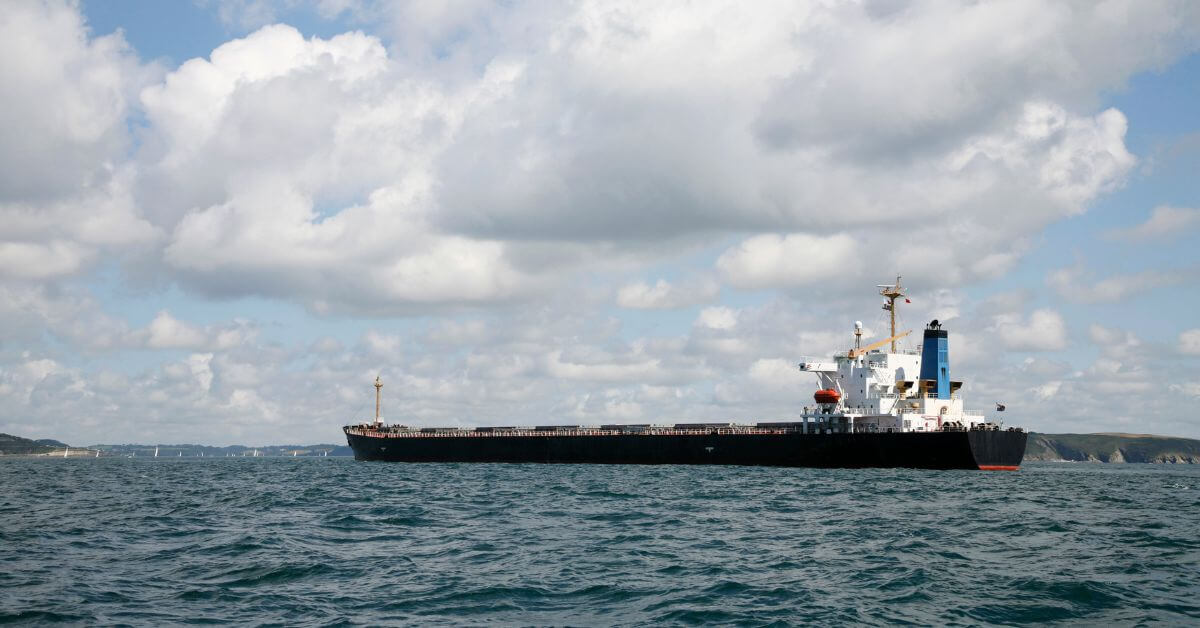
2. Offshore Deepwater Port Capable of Accommodating Very Large Crude Carriers
The offshore deepwater port will be capable of accommodating Very Large Crude Carriers (VLCCs) with a loading capacity of up to 85,000 barrels per hour. Equivalent to approximately 365 million barrels per year.
The final permit enables the innovative use of offshore support vessels to control volatile organic compound (VOC) emissions at a deepwater port. This marks the first time such technology is deployed in conjunction with a VLCC during crude oil loading operations. While the vessel is moored to a single-point mooring (SPM) at an offshore deepwater port.
Similar vapor control technology has been successfully used on shuttle tankers in the North Sea for more than 20 years. Achieving emissions control efficiency exceeding 96%.
3. EPA Issues Clean Air Act Operating Permit for Texas Offshore Deepwater Port Project
The Clean Air Act (CAA) permit, issued as a Synthetic Minor New Source Review (NSR) pre-construction permit together with a Title V operating permit. Includes requirements for monitoring, recordkeeping, and reporting. These include semi-annual and annual compliance certifications to ensure adherence to federal air quality standards.
This marks the first CAA permit issued by the EPA for an offshore deepwater port in Texas. The permit will remain valid for five years from the date of issuance. And Texas GulfLink (TGL) will be required to submit a renewal application at least six months prior to expiration in order to continue operations at the deepwater port.
4. EPA Finalizes CAA Permit Following Public Comment Period
The EPA released a draft permit for public comment on May 21, 2025, and received public input from May 22 through June 27, 2025. The signing of the permit represents the final step in the Clean Air Act permitting process.
Under the Deepwater Port Act, the Maritime Administration (MARAD) of the U.S. Department of Transportation is the authority responsible for issuing the deepwater port license.
Press Release