
International Container Freight Rates Plunge: How Are Vietnamese Businesses Affected?
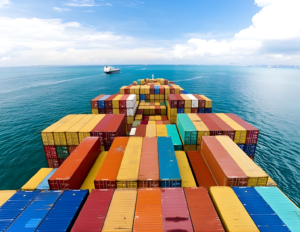
International container freight rates are becoming a clear downward trend in 2026, as transport demand weakens while global fleet capacity remains high. This development not only impacts the global shipping market but also directly affects Vietnam’s import-export enterprises.
International Container Freight Rates Continue to Decline
Data from Drewry – a leading global maritime research and consulting organization – shows that the World Container Index (WCI) has continuously fallen across major shipping routes.
Currently, the index has dropped 5% to USD 2,107 per 40-foot container, mainly due to declining rates on:
-
Trans-Pacific routes
-
Asia – Europe routes
Asia – Europe Freight Rates Fall for the Third Consecutive Week
Spot freight rates on Asia – Europe trade lanes have continued to decrease for the third consecutive week:
-
Shanghai – Rotterdam: down 5% to USD 2,379 per 40-foot container
-
Shanghai – Genoa: down 6% to USD 3,293 per 40-foot container
According to Seatrade Maritime, carriers are expected to cancel 107 sailings in February due to weak demand and sharply falling freight rates, forcing capacity cuts.
Drewry forecasts that spot rates will continue to decline in the coming weeks.
Shipping Lines Adjust Strategies to Cope With Falling Rates
Facing freight rate pressure, many ocean carriers have adjusted their service networks:
-
CMA CGM: withdrawing certain Asia – Europe services from the Suez Canal region
-
Maersk: planning to resume scheduled services from India to the U.S. East Coast via the canal
According to Drewry, this approach allows carriers to:
-
Assess route risks
-
Adjust capacity appropriately
-
Slow the decline of spot freight rates
Vietnamese Import-Export Businesses Directly Impacted
According to the Vietnam Maritime and Inland Waterways Administration, global container freight fluctuations clearly reflect:
-
Supply–demand imbalances
-
Geopolitical risks
-
Supply chain disruptions
Given the highly globalized nature of maritime transport, Vietnam’s import-export freight costs are directly affected.
When international freight rates fluctuate sharply:
-
Logistics costs change
-
Export-import product prices fluctuate
-
Profit margins are impacted
Domestic Shipping Market Remains Stable
In contrast to international markets, domestic container freight rates have remained relatively stable.
Survey data shows:
-
Hai Phong – Ho Chi Minh City: ~VND 5 million / 20-foot container
-
Hai Phong – Cai Mep: ~VND 6 million / 20-foot container
-
40-foot containers: VND 8 – 9.5 million depending on route
Listed Rates Do Not Reflect Actual Prices
According to shipping companies, listed tariffs do not fully reflect real contract rates.
Reasons include:
-
Customer-specific pricing policies
-
Volume commitments
-
Commercial confidentiality
Therefore, actual market freight rates are difficult to determine.
Domestic Rates Remain Stable Thanks to Market Characteristics
The Vietnam Maritime and Inland Waterways Administration states that domestic freight rates remain stable due to:
-
Balanced domestic supply and demand
-
Short transport distances
-
Stable fleet structure
-
High competition among carriers
Recently, rates have only seen minor adjustments based on:
-
Fuel cost fluctuations
-
Seasonal transport demand
No sharp spikes like those seen in international markets have occurred.