
Bahri Charters VLCCs as Freight Rates Surge
(PetroTimes) – Bahri charters VLCCs as oil tanker freight rates climb to their highest level in six years.
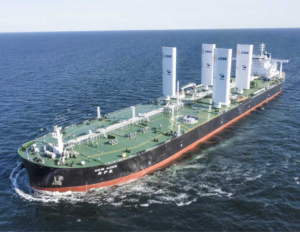
Bahri, the national shipping company of Saudi Arabia, has temporarily chartered at least five very large crude carriers (VLCCs), each capable of transporting around 2 million barrels of crude oil.
The move comes as daily charter rates on the key Middle East–China route surpassed $200,000 for the first time since 2020, according to data compiled by Bloomberg.
Strengthening Saudi Crude Exports to Asia
The newly chartered VLCCs are expected to transport Saudi crude oil to Asia in the coming weeks.
By choosing to charter additional vessels, Bahri signals that the Kingdom is:
-
Increasing crude supply to China and other Asian buyers
-
Capitalizing on stronger short-term demand
-
Locking in freight rates before further potential increases
Saudi Arabia remains the world’s largest crude oil exporter, and Asia continues to be its primary market.
Chinese Demand Rises After OSP Cut
Short-term demand for Saudi crude in China has increased significantly after Riyadh reduced its official selling prices (OSP) for Asia to the lowest level in more than five years relative to regional benchmarks.
As a result, Saudi crude exports to China in March are estimated at 56–57 million barrels, up from 48 million barrels in February, according to traders familiar with the cargo bookings.
This rebound in demand helps explain why Bahri charters VLCCs to secure sufficient shipping capacity.
VLCC Freight Rates Reach Six-Year Peak
VLCC freight rates have climbed to their highest level in six years, driven by several factors:
-
Stronger crude flows from the Middle East to India
-
Accelerated cargo bookings by traders
-
Longer voyage distances due to sanctions and route adjustments
Concerns over potential U.S. military action against Iran have also prompted market participants to move cargoes earlier than planned.
Geopolitical Risks and Rising War Risk Premiums
Growing geopolitical tensions may push war risk insurance premiums higher, increasing overall shipping costs for tanker operators.
Sanctions-related disruptions and extended voyage routes continue to tighten available vessel supply, further supporting elevated freight levels in the global oil shipping market.
Market Impact of Sinokor’s Tanker Acquisitions
After a brief cooling period in January, tanker rates rebounded sharply this month as the market reacted to large-scale vessel acquisitions by Sinokor Merchant Marine.
The South Korean shipping group is now estimated to control roughly one-quarter of the world’s non-sanctioned oil tanker fleet, significantly influencing supply dynamics in the VLCC market.