Hai Phong Seaport targets 122 million tonnes of cargo throughput in 2026
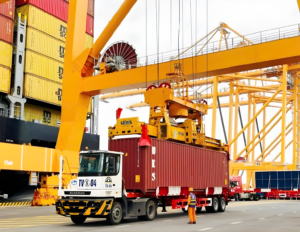
In 2026, Hai Phong seaport aims to achieve a total cargo throughput of 122 million tonnes, including 9.1 million TEUs of container cargo. The number of vessel calls is expected to reach 42,500, reinforcing Hai Phong’s position as the key maritime gateway of northern Vietnam.
According to Hai Phong Maritime Administration, the port authority also targets maritime fee and charge revenues of VND 701.9 billion, while continuing efforts to reduce maritime accidents across all safety indicators and expand new shipping services, particularly trans-Pacific routes.
Hai Phong port system and current operational capacity
Hai Phong currently operates a port system comprising approximately 52 ports, planned across four main areas:
-
Cam River estuary and Cam River area
-
Chua Ve terminal area
-
Dinh Vu port zone
-
Lach Huyen International Gateway Port
This integrated port network plays a critical role in supporting logistics chains, industrial production, and import-export activities across northern Vietnam.
Lach Huyen deep-water port – a strategic growth driver
The year 2026 marks the first full operational year of six deep-water berths at Lach Huyen, featuring:
-
Over 170 hectares of yard area
-
2.4 km of total berth length
-
Capability to accommodate the world’s largest container vessels
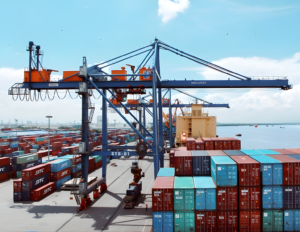
Together with the Cai Mep – Thi Vai port complex, Lach Huyen is one of only two Vietnamese deep-water ports capable of serving the world’s leading container shipping lines, strengthening Hai Phong’s role as a national gateway and international transshipment hub.
Logistics development, coastal economic zones, and next-generation FDI
Alongside port expansion, Hai Phong City has implemented planning for the Southern Coastal Economic Zone, covering approximately 20,000 hectares, centered around Lach Huyen International Port and Nam Do Son Deep-water Port.
According to Mr. Nguyen Anh Tuan, Deputy Director General of the Foreign Investment Agency (Ministry of Finance), Hai Phong should leverage its port advantages to attract next-generation FDI, focusing on:
-
Semiconductors
-
Artificial Intelligence (AI)
-
Automation
-
R&D and high-tech supporting industries
These initiatives align with national strategies to develop smart ports, modern logistics services, international distribution hubs, and a green, carbon-neutral port city.
Nam Do Son port project and long-term vision to 2050
From 2026 onward, Hai Phong’s maritime sector is expected to accelerate significantly with the launch of several large-scale projects, most notably the Nam Do Son port and logistics complex, invested by Vingroup:
-
Total area exceeding 4,300 hectares
-
Total investment of nearly USD 14.2 billion
-
21 berths and 42 wharves
-
Capacity to receive vessels up to 200,000 DWT
Planned container capacity:
-
2 million TEUs by 2030
-
24 million TEUs per year by 2035
-
42 million TEUs per year by 2040
Under Vietnam’s seaport development strategy toward 2050, Hai Phong is designated to become a special-class regional and global seaport, an international logistics hub, and a center for green and smart maritime industry.